Augmented reality in tourism: 8 examples destinations can use
Eight ways cities, trails and attractions use AR today, from talking statues to citywide hunts, and what each one is good for.
Augmented reality in tourism means a visitor holds up a phone and sees something added to the real place in front of them: a storyteller at a monument, a mural that moves, a building that is gone, back where it stood. Here are eight examples, grouped by what a destination wants visitors to do.
Examples that tell the story of a place
1. A storyteller at the landmark
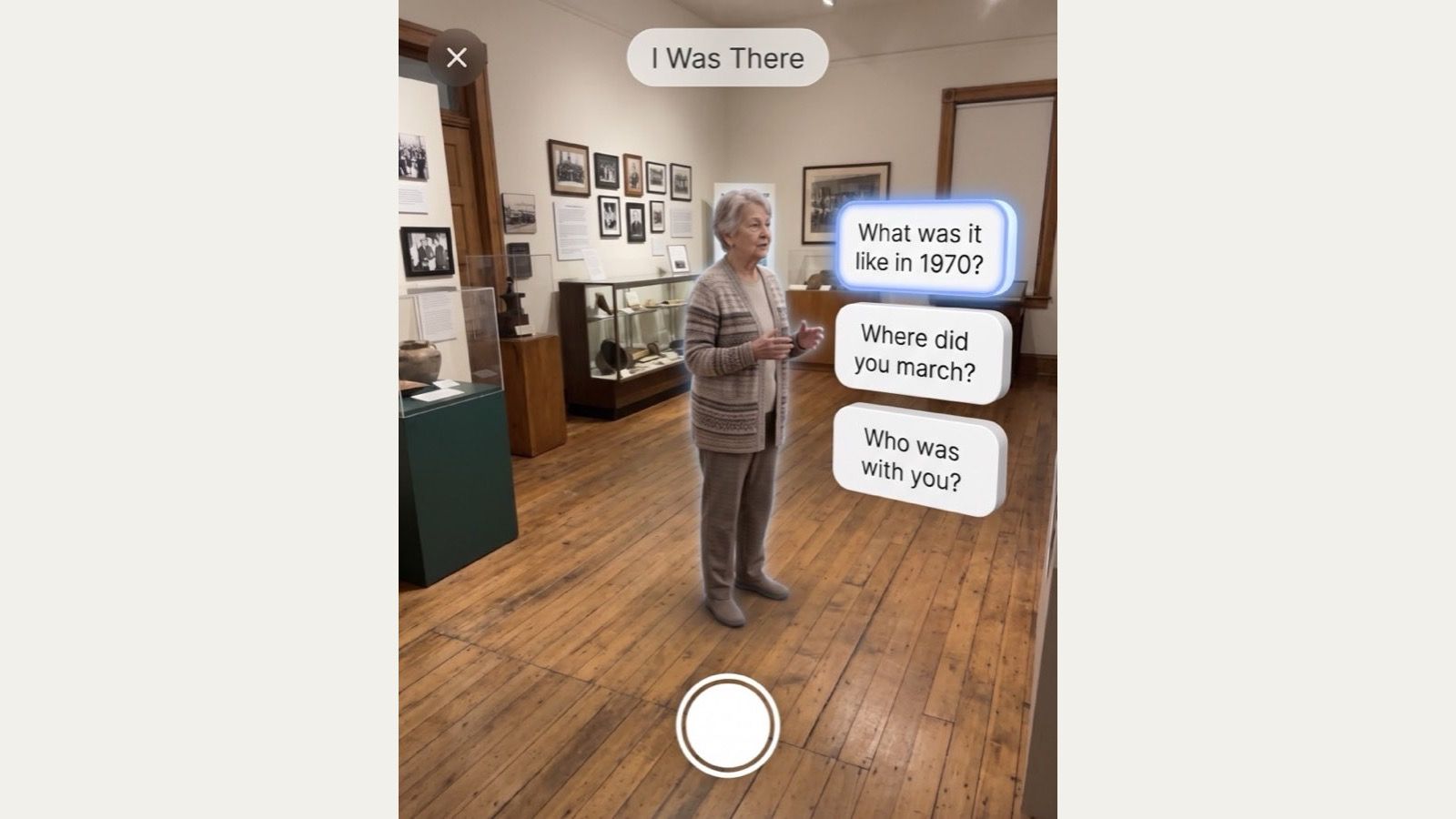
A visitor reaches a statue or a square and a filmed guide appears beside it to explain what happened there. In our Ask a storyteller effect, the visitor asks a question and a filmed answer plays.
2. A figure from history you can talk to
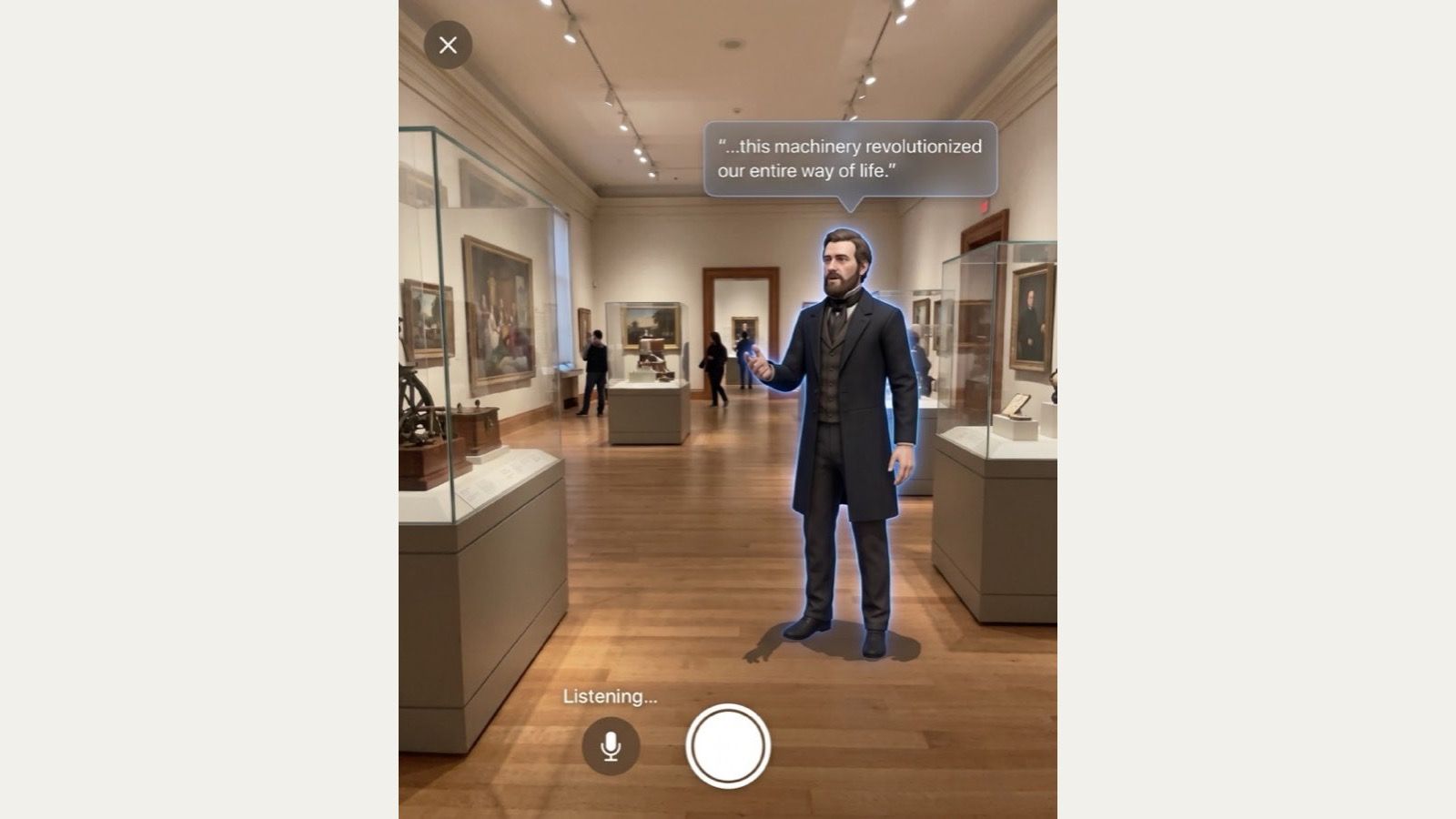
Talk to history puts a life-size figure in front of the visitor that answers questions out loud. It works best at a site with one strong character, such as a founder, an inventor or a local legend.
3. A building that is gone, back at full size
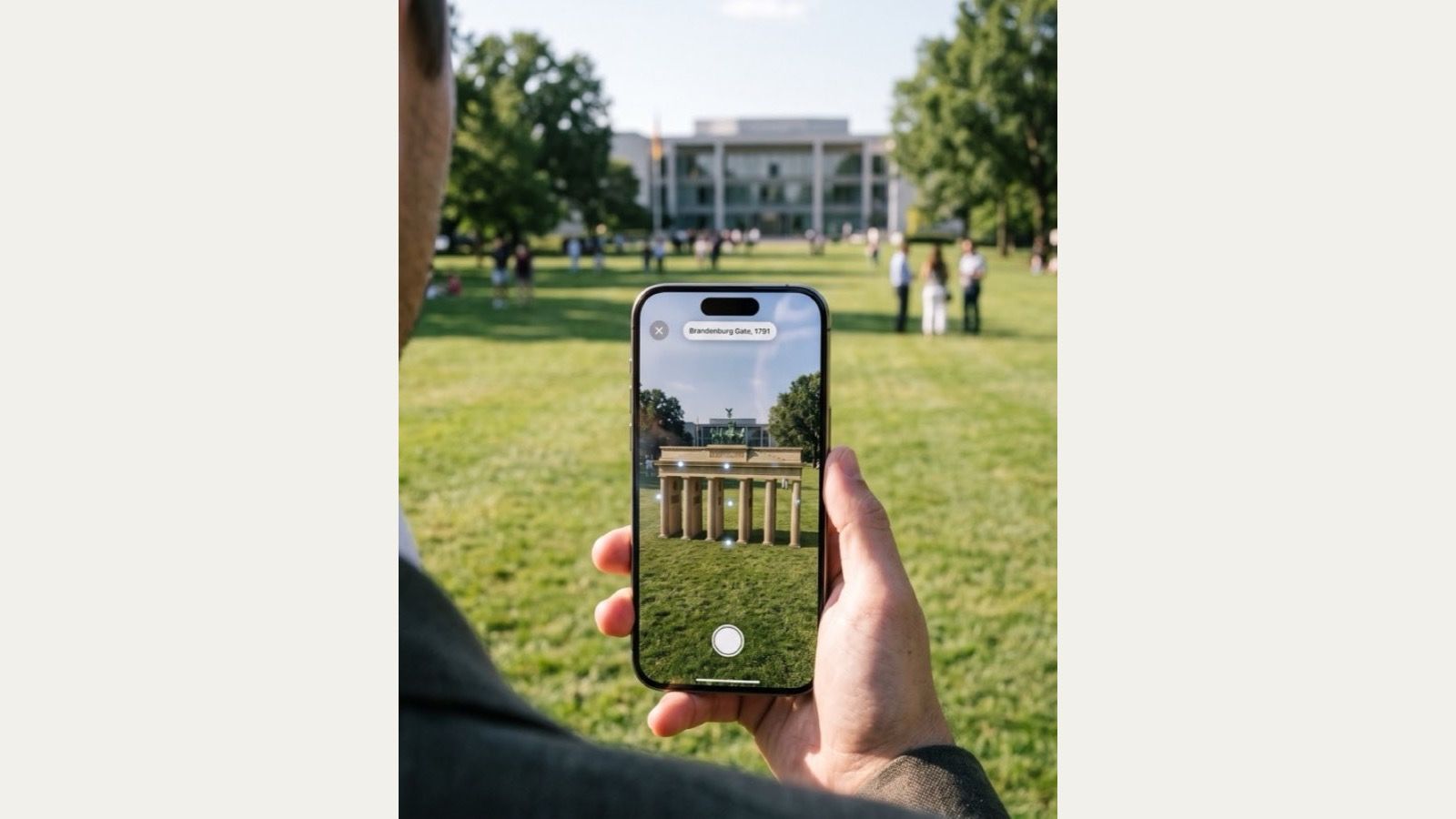
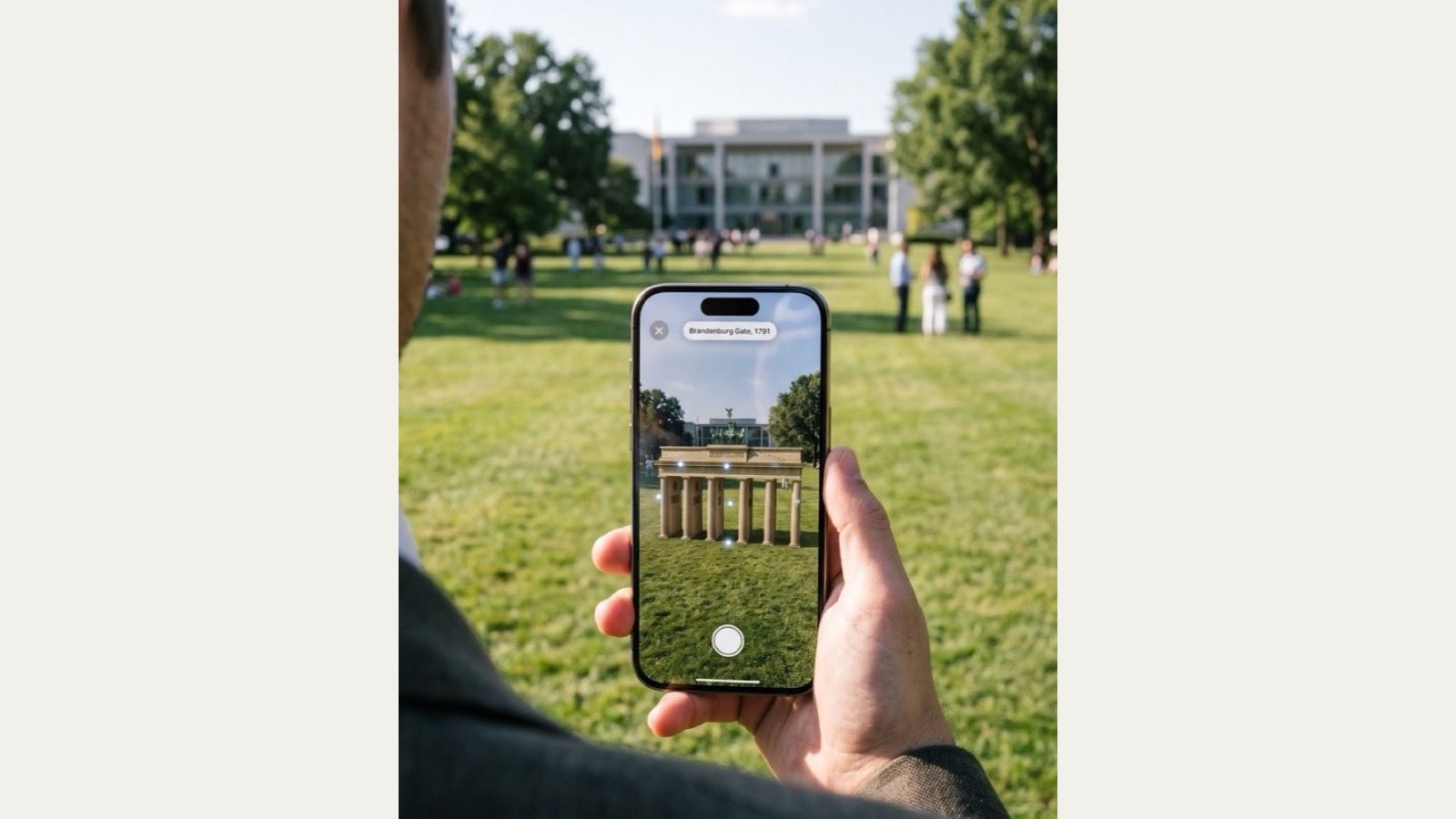
A lost landmark, an old city gate or a demolished theatre can stand on its real spot again. Visitors walk around it and tap for dates and facts. Our Monumental gate effect places a full-size columned gate on a lawn.
Examples that move visitors around
4. A citywide scavenger hunt
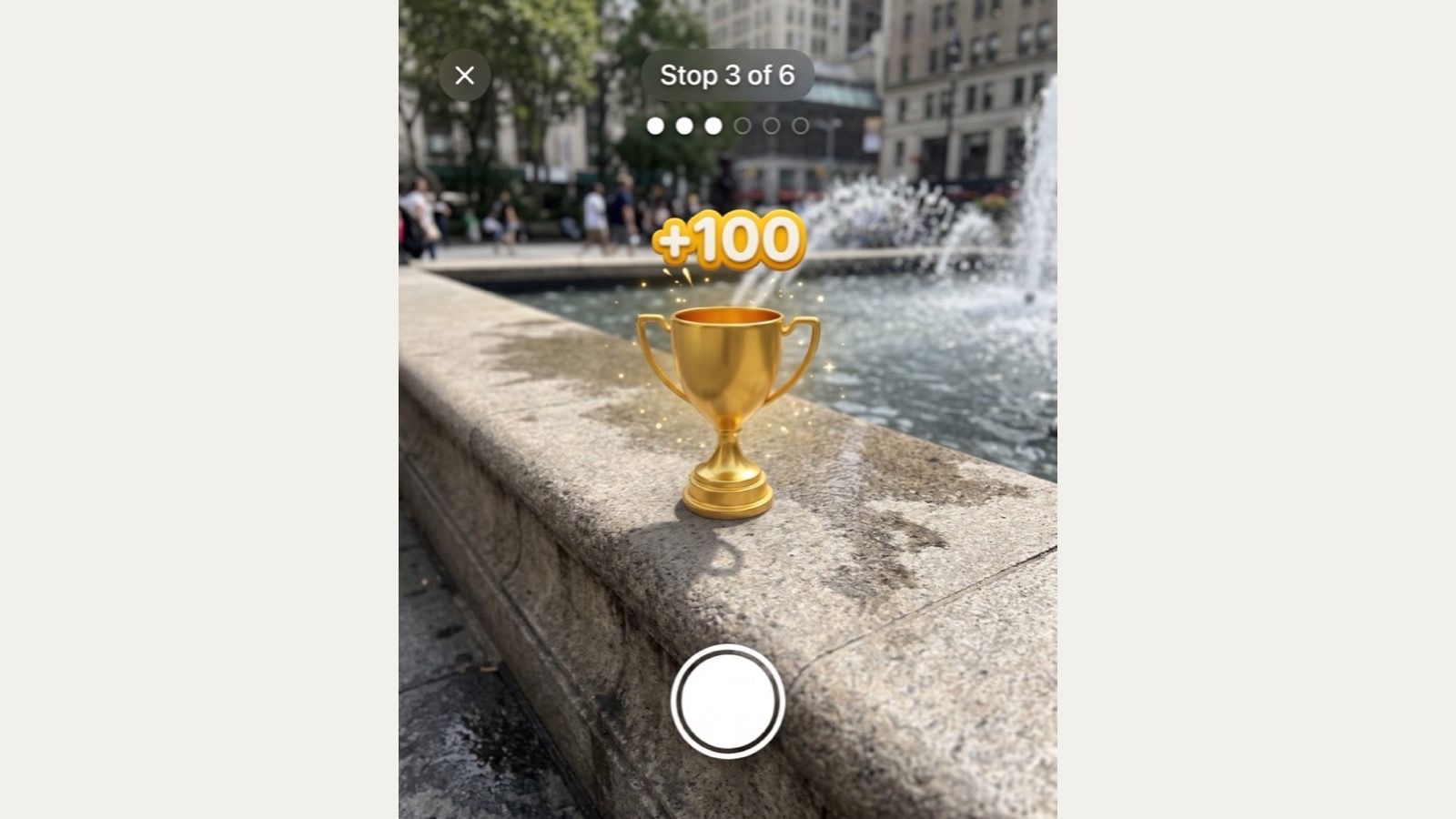
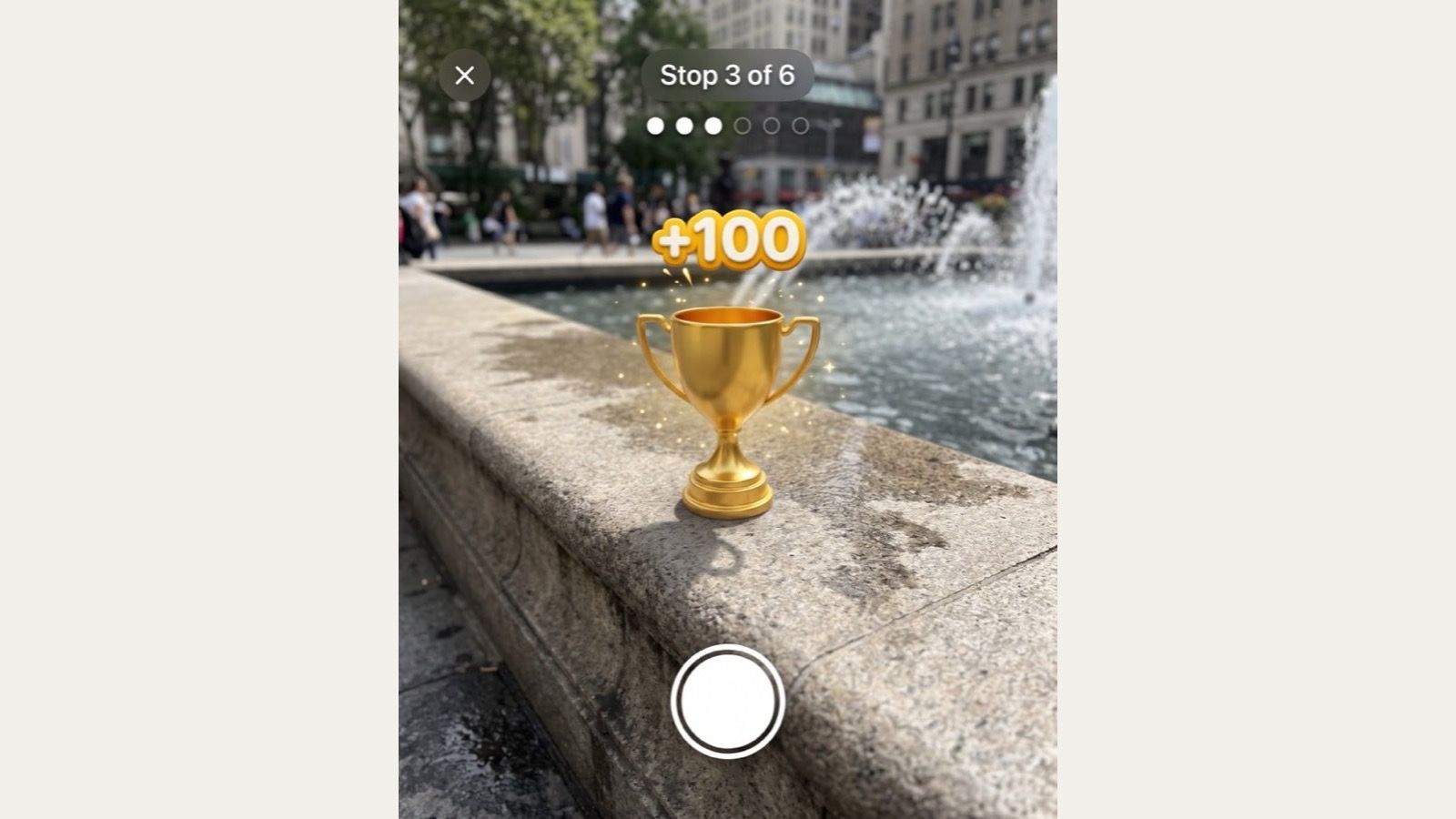
Hide something at each stop and let visitors collect it for points. In our Citywide hunt effect, visitors find a trophy at each stop and snap it, and the scores feed a leaderboard and prizes. At Passport DC, Events DC's month-long Around the World Embassy Tour, visitors earned badges in the Destination Pass app as they toured embassies across the city, and the app reached 20,000 downloads in that single month.
5. Shops that put something on the sidewalk
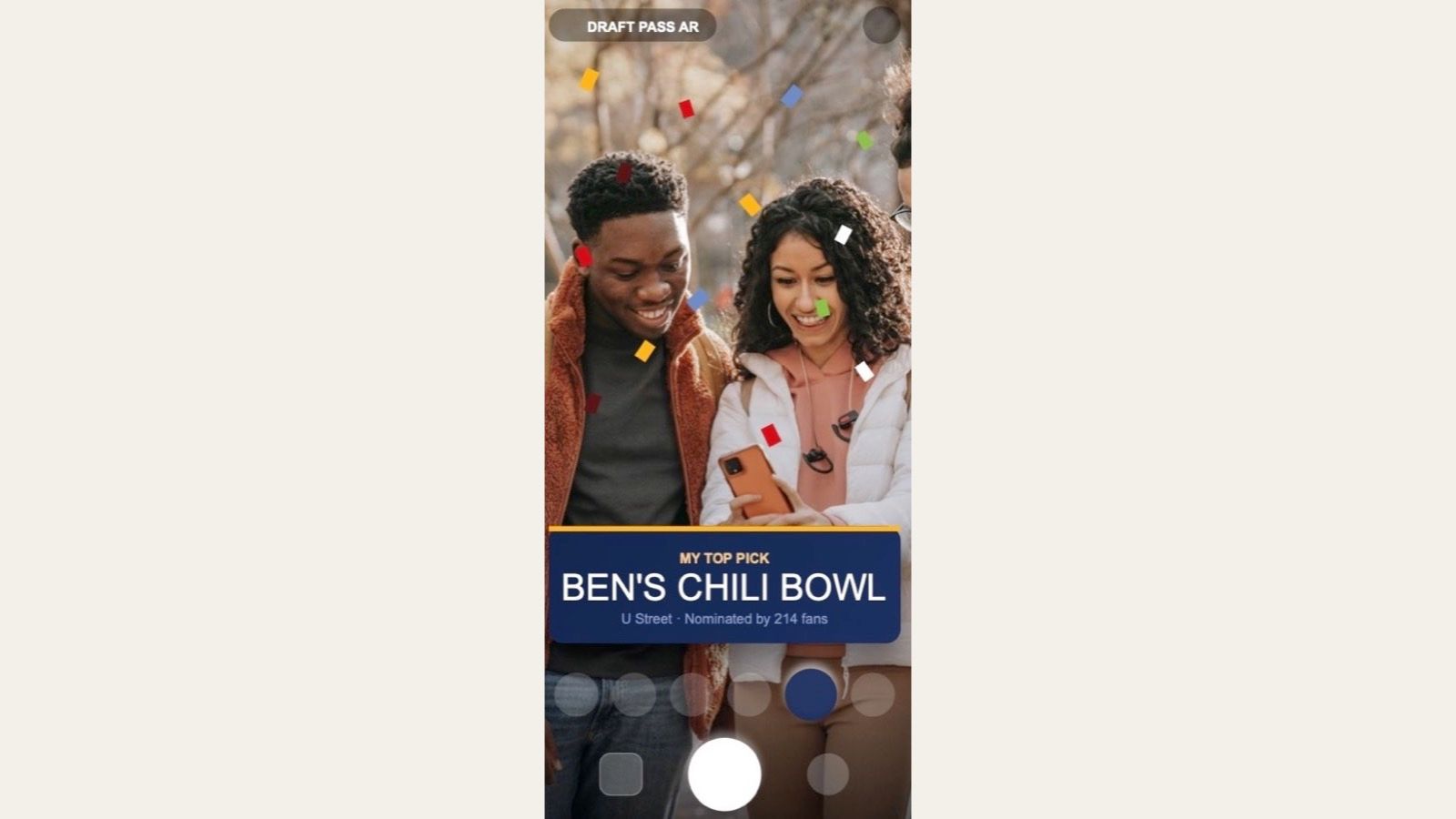
Main-street businesses can place a life-size product or a giant "our pick" card outside the door, so a walking trail also sends people into local shops.
Examples that turn a picture into a moment
6. A mural that comes alive
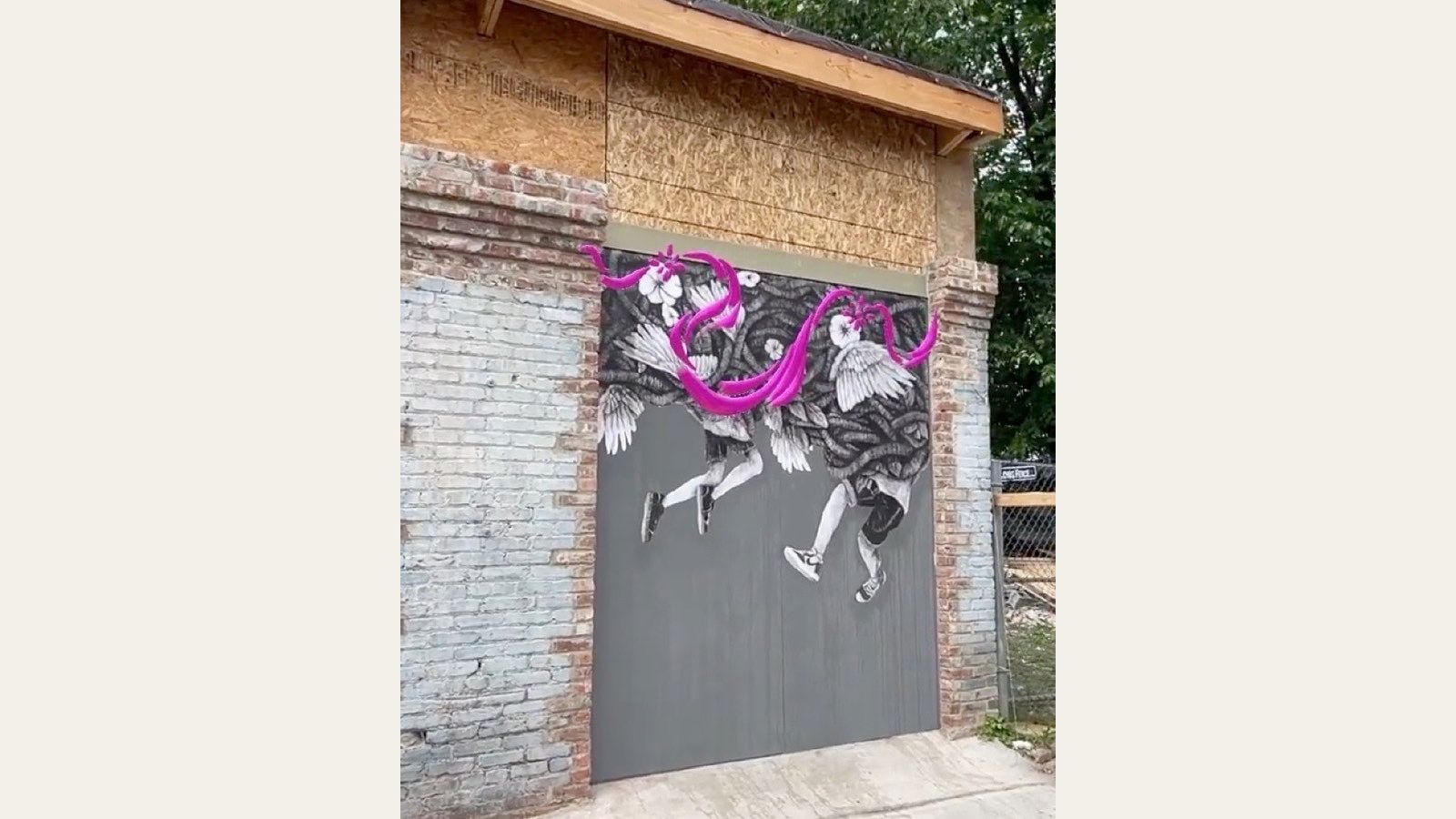
Point the phone at a mural and it moves. For Mythic Futures, artist Antoine Williams and The Nicholson Project put four Afrofuturist murals in public space, one in each quadrant of Washington, DC. We gave each mural an AR layer of animation and audio that visitors opened through Instagram, with no app to download, while the series was on view from June to December 2023.
The same idea works for any wall. In Mural come alive, ribbons and blossoms move across an alley mural with its own audio piece, and in Mural of tiles a coin spins, a boat rocks and a car drives out of the wall. Street-art tours, trail signs and printed maps work the same way.
7. A portal to another time or place
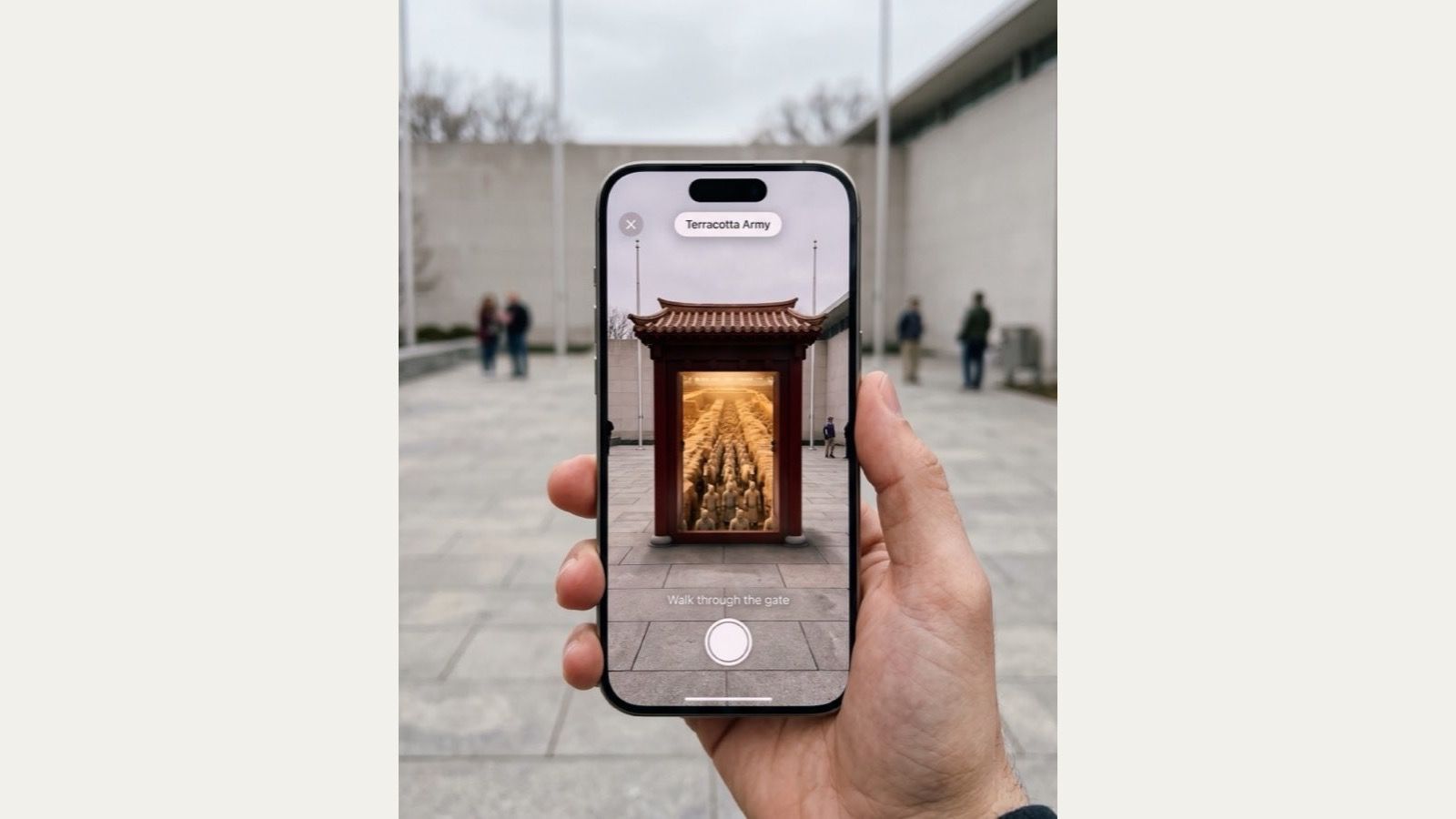
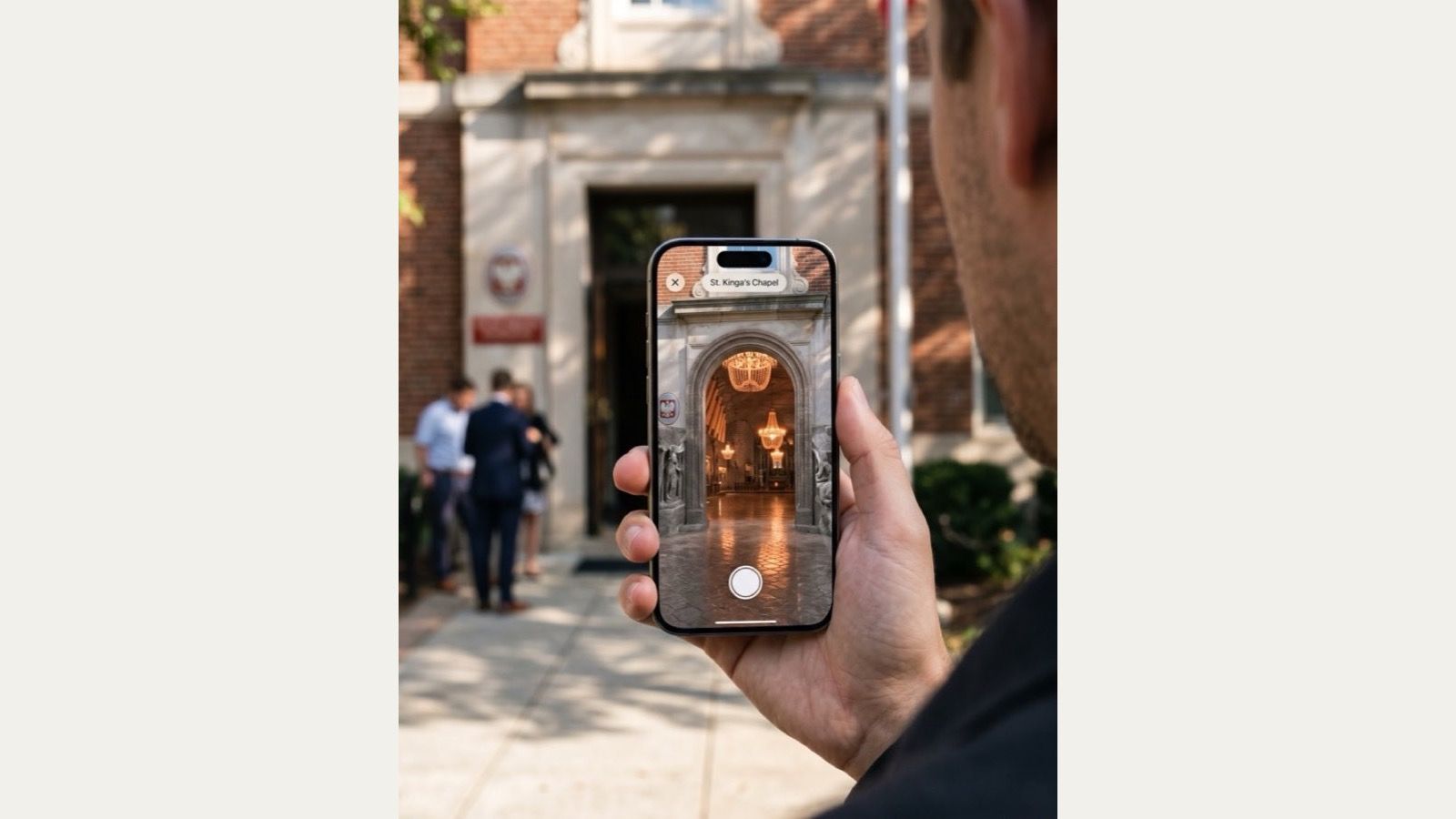
A doorway appears and visitors step through into somewhere else. Gate to an ancient army opens a temple gate onto a vast excavation, and Doorway to a salt chapel turns an ordinary front door into a carved chapel. Both fit a museum exhibit or a heritage site.
8. A selfie filter for the place
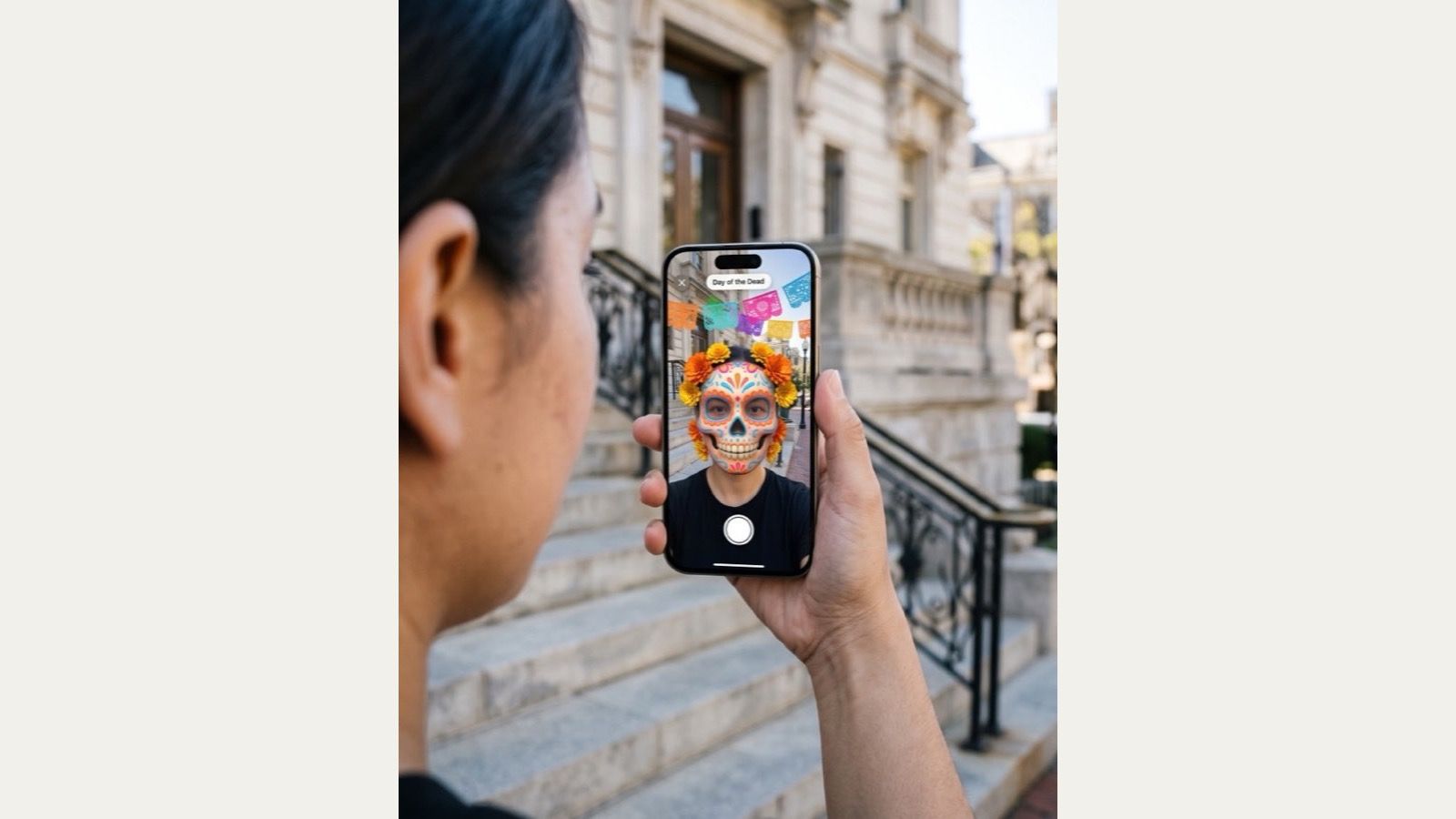
A filter tied to a festival, a season or a local tradition gives visitors a photo worth posting, with the destination in every frame. Festival face paint adds a painted skull and flower crown for a celebration.
Start with the visitor goal
Pick the effect by the job: telling the story of a place, getting people to walk the full route, or creating a photo people share. One clear effect per stop works better than three competing ones.
Destination Pass puts these effects in the same app as your map, tours, badges and leaderboards, so you see launches, finishes and shares for each stop. See how it works on our AR for tourism and destinations page.